
How to understand comment insights
The Comment Analysis card turns your analyzed comments into a Siftsy Score, a written summary, themes, and top comments. This guide explains what each section shows and how to read it.
Reading the Siftsy Score
The Siftsy Score is a 1–10 rating on a circular gauge. It reflects how the audience reacts to your content by blending sentiment, engagement quality, and topic relevance across the comments in your selected posts. Version 3 is the default scoring model, and you can read exactly how it works in Intro to Siftsy Score V3.
The gauge label shows the band your score falls into: Off, Sub Par, Good, or Immaculate. Bars beneath the score break the score down into three components:
Sentiment — how commenters feel about the post and the topics it discusses
Relevance — how on-topic the conversation actually is
Consensus — how aligned commenters are with each other
Sentiment carries the most weight at 66%, with Relevance and Consensus at 16.5% each. A Blend bar shows the mix of the three signals behind the score.
Two toggles on the Score card adjust how the breakdown reads:
Engagement-weighted — controls whether comments with more likes and replies count more toward the score
Combine into 3 buckets — collapses the five sentiment levels into three buckets
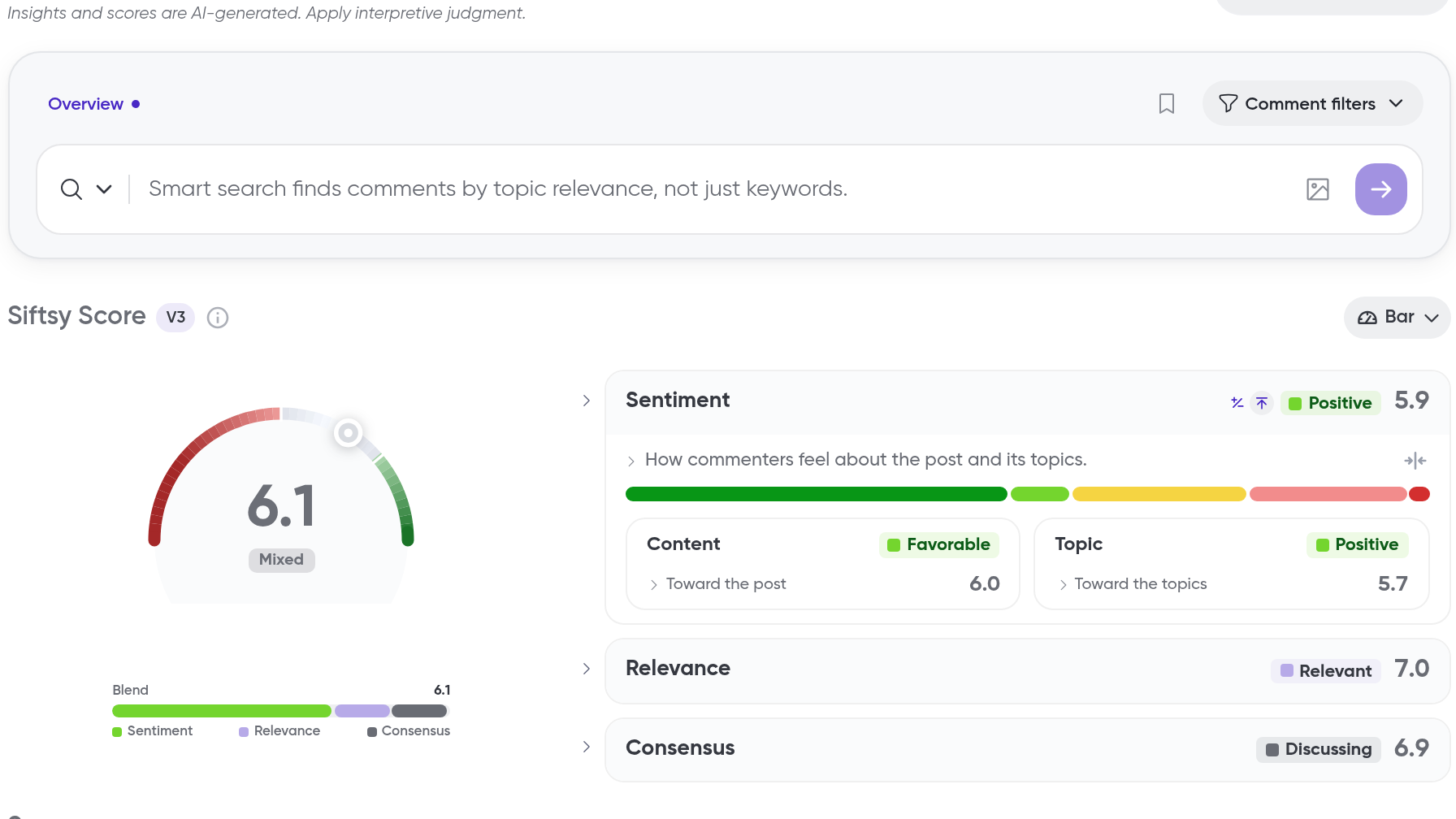
Content vs. Topic sentiment
Version 3 gives every comment two separate sentiment readings: how commenters feel about the post and its creator (Content), and how they feel about the subjects being discussed (Topic). Overall sentiment is the average of the two, and the split is where the insight lives. A high Content score with a low Topic score means the audience likes the execution but not the subject, so revisit the message rather than the creative. The reverse means the subject resonates and the post is what is missing.
Context and Stats
Context and Stats are two further sections on the Comment Analysis card, alongside the Score, Summary, Themes, and Top Comments. You can show or hide any of them; see How to show or hide Insight card sections.
Understanding the summary
The Summary section synthesizes the major takeaways from your comment section in writing. It highlights:
The overall direction of the reaction
Key topics or themes that came up repeatedly
Notable audience concerns or praises
Patterns that would be hard to spot reading comments individually
Use the summary to get the gist before diving into the detailed sections.
Exploring themes
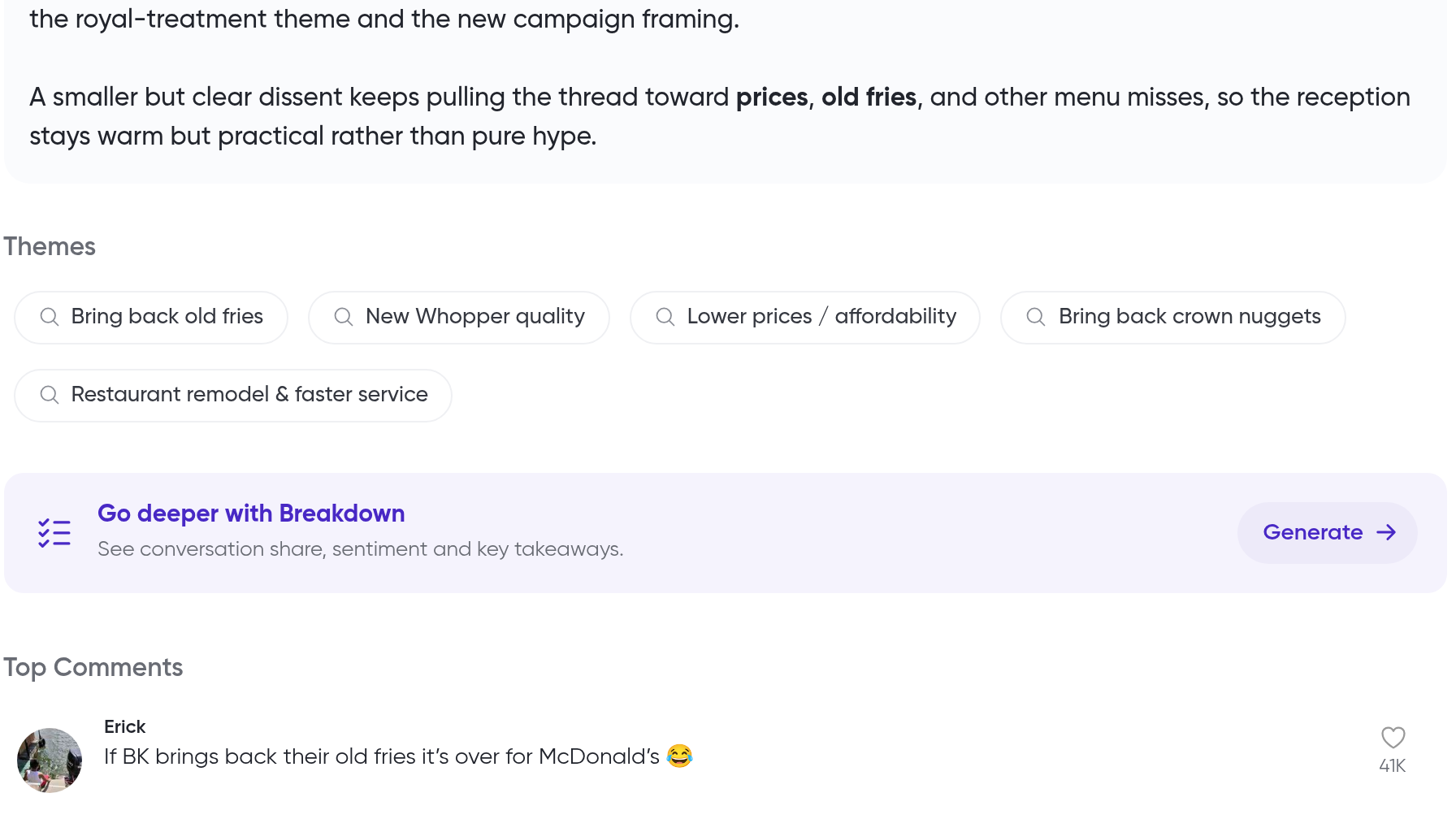
The Themes section surfaces clusters of related comments, showing what commenters are discussing and how the conversation is trending. Themes help you:
Identify what is driving positive or negative reactions
Spot emerging concerns before they become major issues
Understand which product features or creative elements resonated most
Click the search icon next to any topic to create a new analysis tab focused only on comments related to that topic. See How to explore and search the comments for more details.
Viewing top comments
The Top Comments section surfaces the most notable comments in the comment sections: comments that stand out because of their engagement, sentiment clarity, or representativeness of the broader conversation. Top comments help you:
Find quotes for stakeholder presentations
Identify highly engaged audience members
Spot comments that sparked follow-up discussion
Keywords and emojis
The Comment Analysis card also includes breakdowns of frequently used keywords and emojis across the comment section. Keywords show which terms dominate the conversation, and emojis reveal its emotional tone at a glance.
What's next
How to interpret sentiment scores — understand the sentiment component and its distribution
Intro to Siftsy Score V3 — the scoring formula, the Content vs. Topic split, and the built-in guardrails
Updating from Siftsy Score V2 to V3 — switch score versions in Analysis Settings and compare them
How to explore and search the comments — investigate the comments behind a score or theme
How to export an analysis — download your findings